

← Field Notes ← Back to Writing
Field Notes / 007
Beneath the Golden Clock
Grand Central, the architecture of time, and finding my way home.
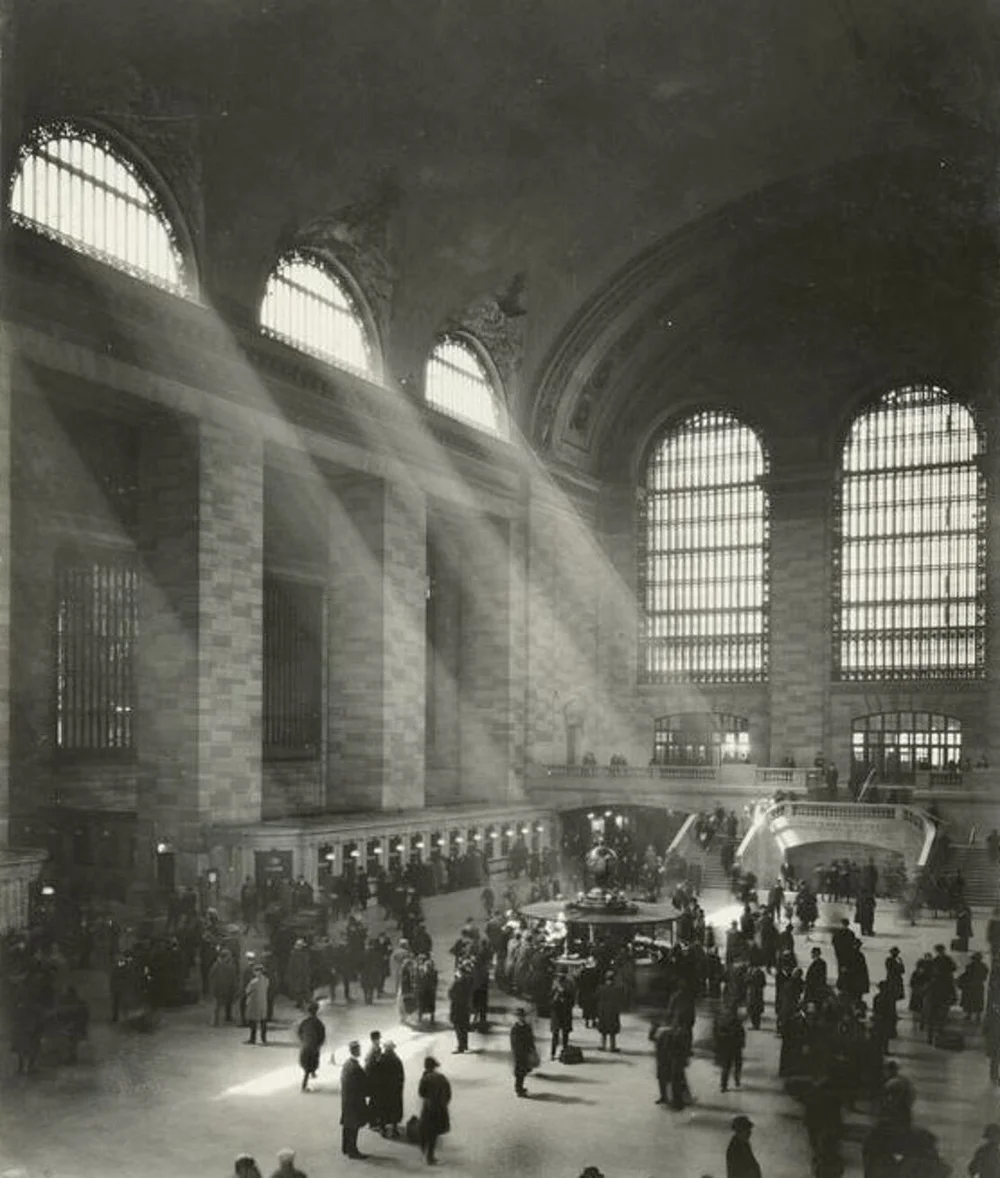


There are places that become part of you long before you understand what they mean. The sounds, the smells, the people, even the details of the architecture stay with you. Sometimes it takes years of being away before you realize how much of yourself you’ve left in a place. For me, Grand Central Terminal is one of them.
I remember leaving Peekskill, stepping on to that Metro-North train, and knowing we were headed into the city. There was something about the air and the familiar smell of the railroad, that feeling of getting ready to go somewhere. We’d ride south along the Hudson, watching the towns and river give way to Manhattan. The train connected two different worlds without making either one feel far away. Even as a child, I loved knowing I could just get on and go.
Then we’d pull into Grand Central. GCT. We’d come off the train, walk up those little ramps, and suddenly the whole place would open around us. The main concourse, that enormous ceiling, voices and footsteps moving in every direction. Man, there’s nothing like it. To somebody passing through for the first time, it might have looked like chaos. To me, it was New York. Everybody had somewhere to go, and somehow all that movement had its own rhythm.
My Mom and I used to get black-and-white cookies. We’d walk around, talk, and eventually find our way back toward the train. Sometimes the trip went the other way: we’d leave 14th St. aka Union Square, catch the 4 train to Grand Central–42nd Street, and board Metro-North for the ride home to Peekskill. Both directions felt like an adventure. One carried the anticipation of the city; the other carried the comfort of going home. I remember the underground platforms, the illuminated trains, the conductors, the machinery, and the passengers getting ready to go home. Grand Central was in the middle of it all, sending us out and bringing us back. I’ve come to think of it as a slingshot of hope.
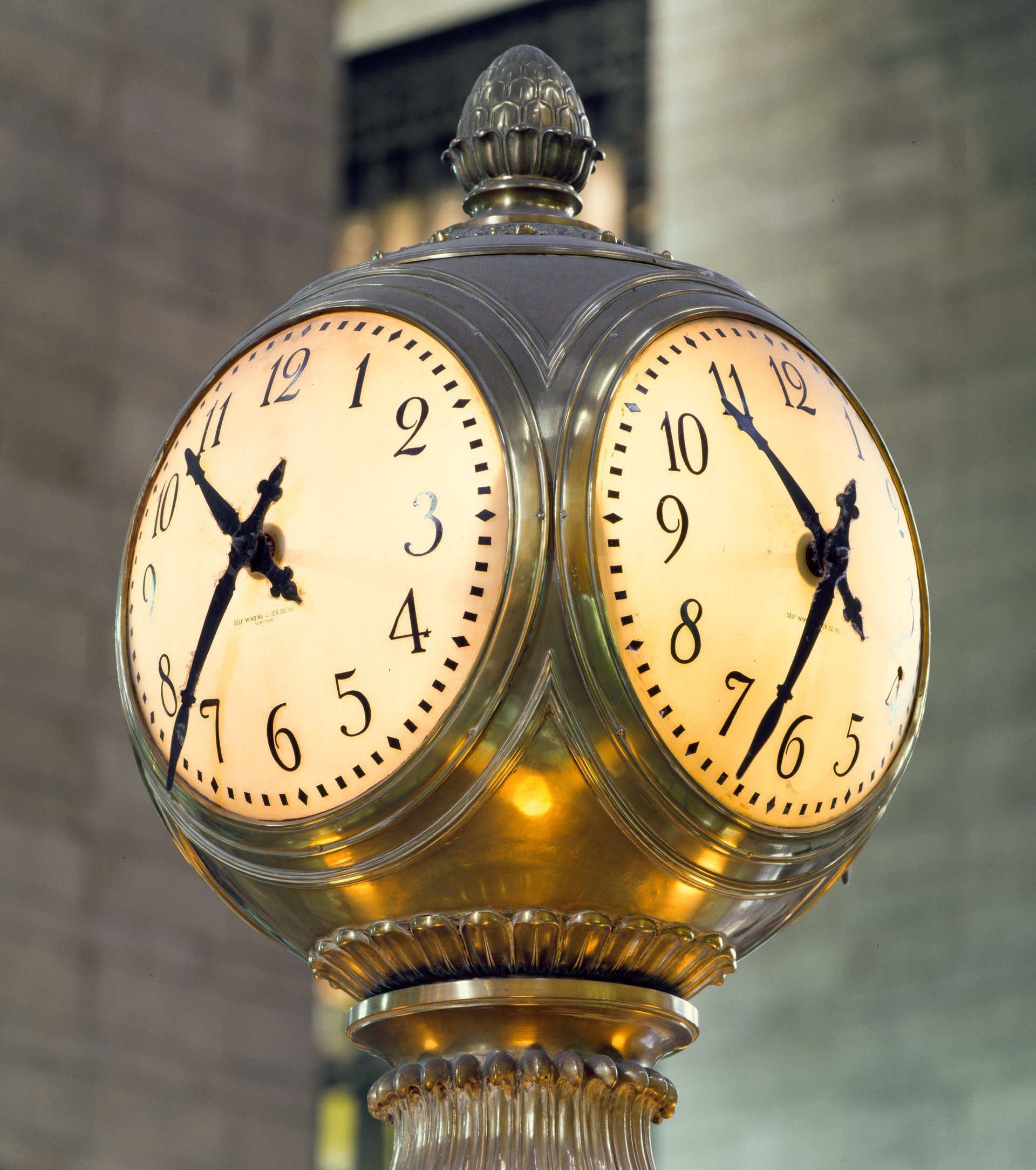
It’s like a place of history, a place that moves so fast, yet keeps you standing still. And in the middle of all that movement is the golden clock. I’ve always been stunned by it. People rushing past, meeting underneath it, checking the hour before disappearing toward a platform, while the clock remains where it’s been for generations. The brass clock has watched over the concourse since the terminal opened in 1913. Its four faces are opaline glass. There’s a small acorn above it, a symbol associated with the Vanderbilt family. For all the stories about the clock’s supposed fortune in gemstones, the faces are glass. I like that better. Something doesn’t have to be made of precious stones to become priceless. 39


I think about the people who built this place, too. Not only the architects and railroad financiers whose names appear in the history books, but the workers who moved earth, handled steel, installed electrical equipment, laid tracks, and shaped stone. After a deadly Park Avenue Tunnel collision in 1902, New York accelerated its move away from steam-powered operations. Chief engineer William J. Wilgus helped develop the electric railroad and new terminal. Crews rebuilt that enormous system while train service continued, and the ramps I remember so clearly were part of a design meant to move people through the building more naturally. All that intelligence was beneath my feet before I knew what to call it. 12
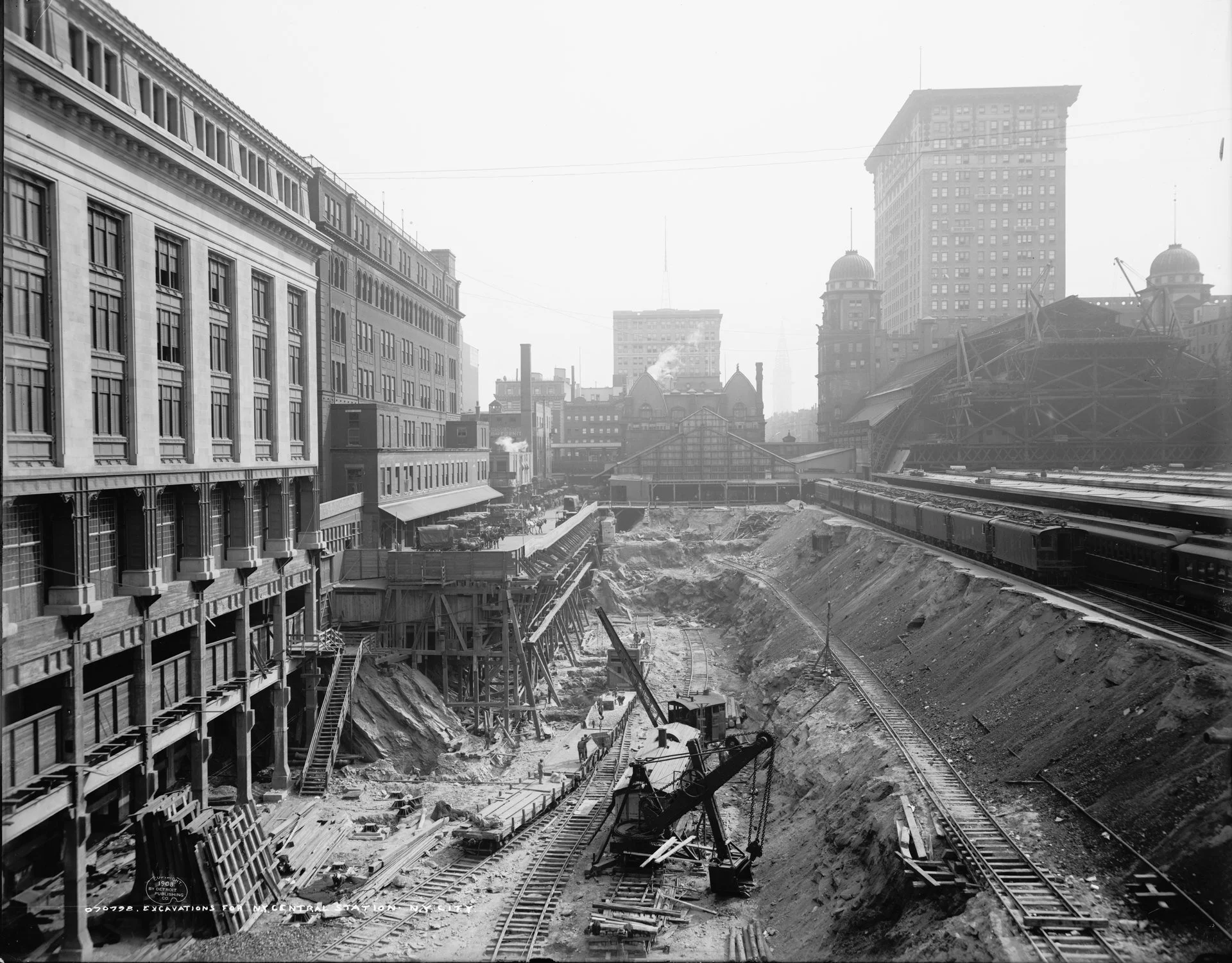


One detail surprised me when I started reading about the construction. Some of the earth and rock excavated for Grand Central was carried north and used to expand railroad property at Croton-on-Hudson, along the same corridor I grew up traveling. Even the material removed from Manhattan had a life farther up the river. It made me wonder how many generations of labor we move through every day without recognizing them. The terminal survived threats of redevelopment because people fought to preserve it. In 1978, the Supreme Court upheld the application of New York City’s landmarks law to Grand Central. Yet preserving a place doesn’t mean freezing it in time. It means caring enough to help it keep living. 18
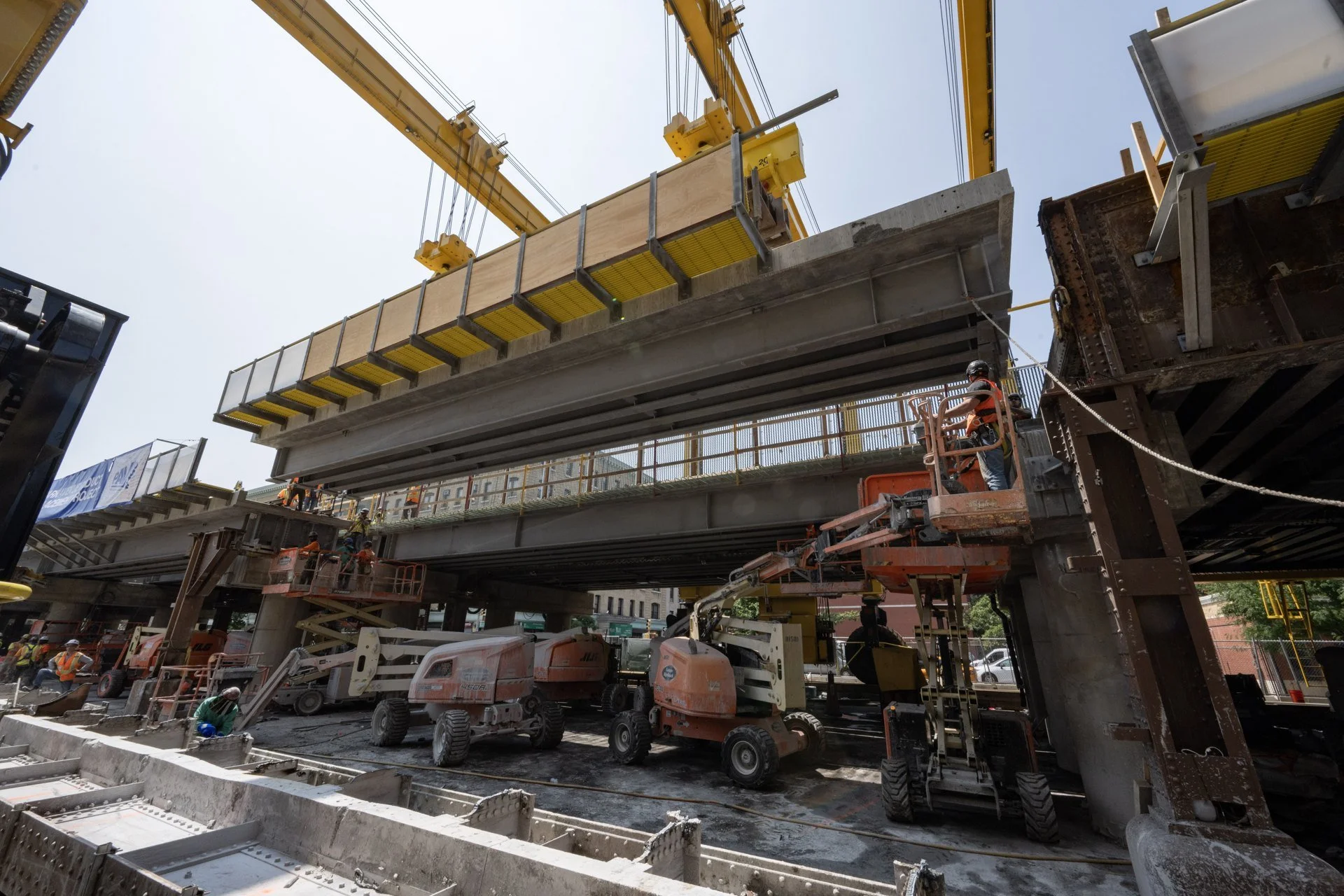
That’s what hit me when I watched the Park Avenue Viaduct reconstruction. The PAV, as we called it, was part of our way home. In the reconstruction footage, I watched crews remove sections of the old railroad and bring prefabricated replacements into place with huge gantry equipment. They worked around an active commuter system, keeping trains moving on the other tracks while the structure beneath them changed. In July 2026, New York State reported that 196 bridge structures had been replaced over 28 weekends without a train delay attributed to the replacement work. Watching that kind of coordination felt like watching American engineering catch up with its own possibilities. But more than anything, I was watching people rebuild a piece of my childhood. 45
I’ve seen the newer ships coming together in local shipyards and followed the massive tunnel-boring work on the Hampton Roads Bridge-Tunnel. I love that kind of engineering, the mathematics and human labor behind something most of us eventually use without a second thought. Still, the viaduct struck a different nerve. It wasn’t a project on the other side of the world. It was the railroad I knew, getting another chance to carry people home. 10
I love living in the South. I love the space, the water, and the peace when I need it. But around Hampton Roads, it’s hard to move through everyday life without a car. You can’t simply decide to hop on a train and go somewhere the way you can in New York. Bus service exists, but depending on where you’re headed, the wait and the connections can turn a small trip into an undertaking. Some days it feels like I hear fighter jets more often than I hear trains. That contrast says something about the sounds that have surrounded my life in different places.
Epilepsy has made me think about transportation differently, too. I don’t want my freedom to explore a city, see family, or make an appointment to depend on whether I can safely drive. I miss the simple act of walking to a station and going somewhere. In New York, you can stand inside Grand Central and imagine dozens of directions opening around you. You can go north into the Hudson Valley, east onto Long Island through Grand Central Madison, or move through the subway to another borough. With a connection to Penn Station, you can even board an Amtrak train bound for Montréal or Toronto. Those international trains don’t leave Grand Central itself, but that’s almost the point: one connected city leads into another network, and suddenly the map feels bigger. 61112
That’s what I miss most about the Northeast. The possibilities are close enough to reach. I can spend the day in a museum, sit in Central Park, see a show, or leave the city and find quiet along the Hudson. The movement doesn’t have to mean rushing. Sometimes it means having the choice to go, or the choice to stay still. I want my son, who loves engineering, to see how much thought goes into making that freedom possible. And I want to be closer to the people I love. Those aren’t separate dreams to me anymore.
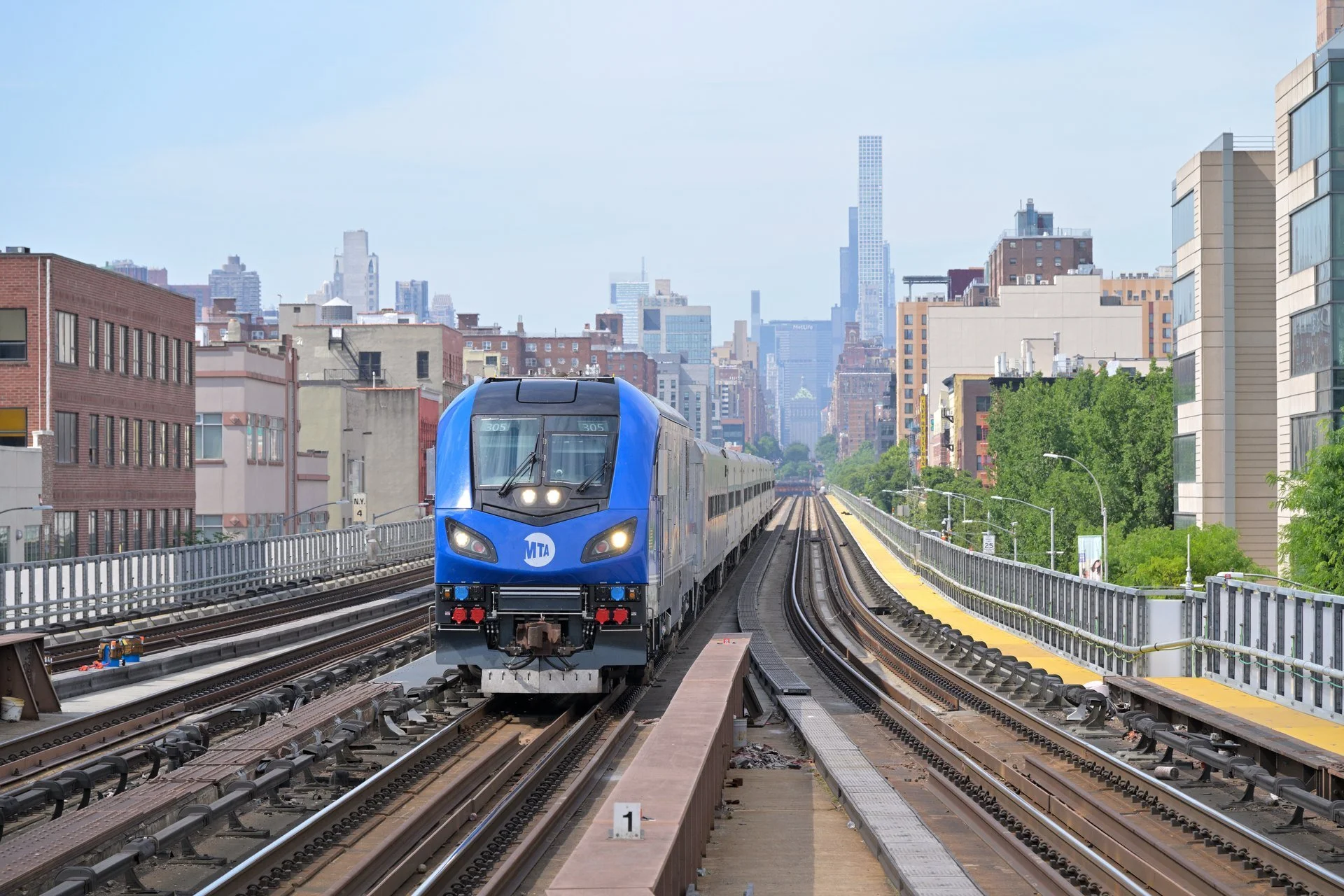

I keep picturing a shot for Metro-North to Nowhere: me sitting beside the window as the train passes through the PAV, the steel and buildings moving beyond my reflection. No big performance. Just the same journey I took as a child, seen through different eyes. I think about the workers who built Grand Central, the people who saved it, and the engineers carrying its railroad into another century. The machinery changes, the city changes, and the people passing through grow older. Yet everybody’s still trying to get somewhere.
And I can still see those ramps, the main concourse, and that gold clock. Grand Central holds so many versions of a life without asking any of them to explain themselves. I don’t want to recover the past. I want to carry what matters from it into whatever comes next. Maybe that’s why the place has always felt like a slingshot of hope to me: a reminder that you can be rooted in history and still be moving forward. Sometimes progress is a massive machine lifting a bridge into place. Sometimes it’s a train arriving on time. And sometimes it’s stepping off that train, walking up a familiar ramp, and knowing you’re home.
Sources and further reading
- American Society of Civil Engineers — Grand Central Terminal. Opening, Wilgus, electrification, uninterrupted railroad operations, ramps, and excavation carried to Croton-on-Hudson.
- Grand Central Terminal — History. Official terminal history, including its February 2, 1913 opening.
- Michelle Young / Untapped New York — Is the Grand Central Clock Worth $20 Million?. September 3, 2020. Opaline glass, brass, and the unsupported gemstone valuation; cites Transit Museum records and Metro-North confirmation.
- New York State — Park Avenue Viaduct Phase One Milestone. October 6, 2025. Prefabricated sections, movable gantry, weekend operations and remaining tracks.
- New York State — Early Completion of Major Structural Replacement of Park Avenue Viaduct. July 27, 2026. Agency-reported 196 structures and 28 weekends; operational, schedule and budget claims.
- Amtrak — Adirondack Route Timetable. Timetable retrieved October 18, 2026 (New York time). New York Moynihan Train Hall (NYP)–Montréal.
- Amtrak — Maple Leaf Travelers Can Now Buy Tickets to and from Toronto. June 27, 2022. Historical service-resumption announcement; New York Penn Station and Toronto route.
- Historical Society of the New York Courts — Celebrating Penn Central Day. The June 26, 1978 Supreme Court decision and its preservation significance.
- Grand Central Terminal — What to See: Architectural Details. Vanderbilt acorn symbolism. Its clock valuation is a conflicting promotional claim, not an authenticated appraisal.
- VDOT — Hampton Roads Bridge-Tunnel Expansion: Tunnel Boring. Further reading on the tunnel-boring work mentioned in the author’s reflection.
- Amtrak — Maple Leaf Route Timetable. Current timetable retrieved October 18, 2026 (New York time); Toronto–New York service.
- Grand Central Terminal — Transit. Metro-North, subway and Grand Central Madison / Long Island Rail Road connections.
- Library of Congress / Detroit Publishing Company — Excavations for N.Y. Grand Central Station, N.Y. City. 1908 photograph. Detroit Publishing Company Collection. Source collection identifies no known restrictions on publication.
- Wikimedia Commons — Excavations for N.Y. Grand Central Station, N.Y. City. Download record, 1908 copyright date, creator/collection provenance and U.S. public-domain status.