

← Field Notes ← Back to Writing
Industry. Architecture. Machines in motion.
Field Notes / 003 · Updated
The Current Was Already There
Growing Up Inside New York's Electrical Grid
I knew electricity before I understood electricity. Before I knew what voltage meant, before I understood amperage or what a transformer was actually transforming, electricity was already part of the architecture of my childhood. It was underneath the streets, above my head and behind the walls. It ran beside the Hudson and through Manhattan after sunset. It was in my mother’s work, in the skyline, in the trains, in the enormous machinery adults seemed to understand and children were expected simply to trust. Long before electricity became language to me, I was already living inside its current.
Read the full essay
My mother worked for Con Edison, but she did not enter that world at the top. She started in the mail room. I think about that differently now than I did as a child. She entered one of the largest and most important energy companies in New York carrying information through the building, learning the people, learning the structure and learning how the place moved. Then she worked herself upward, position by position, responsibility by responsibility. By the time I was old enough to understand that my mother went into Manhattan every day for work, she had already traveled a distance inside that company that I could not yet comprehend.
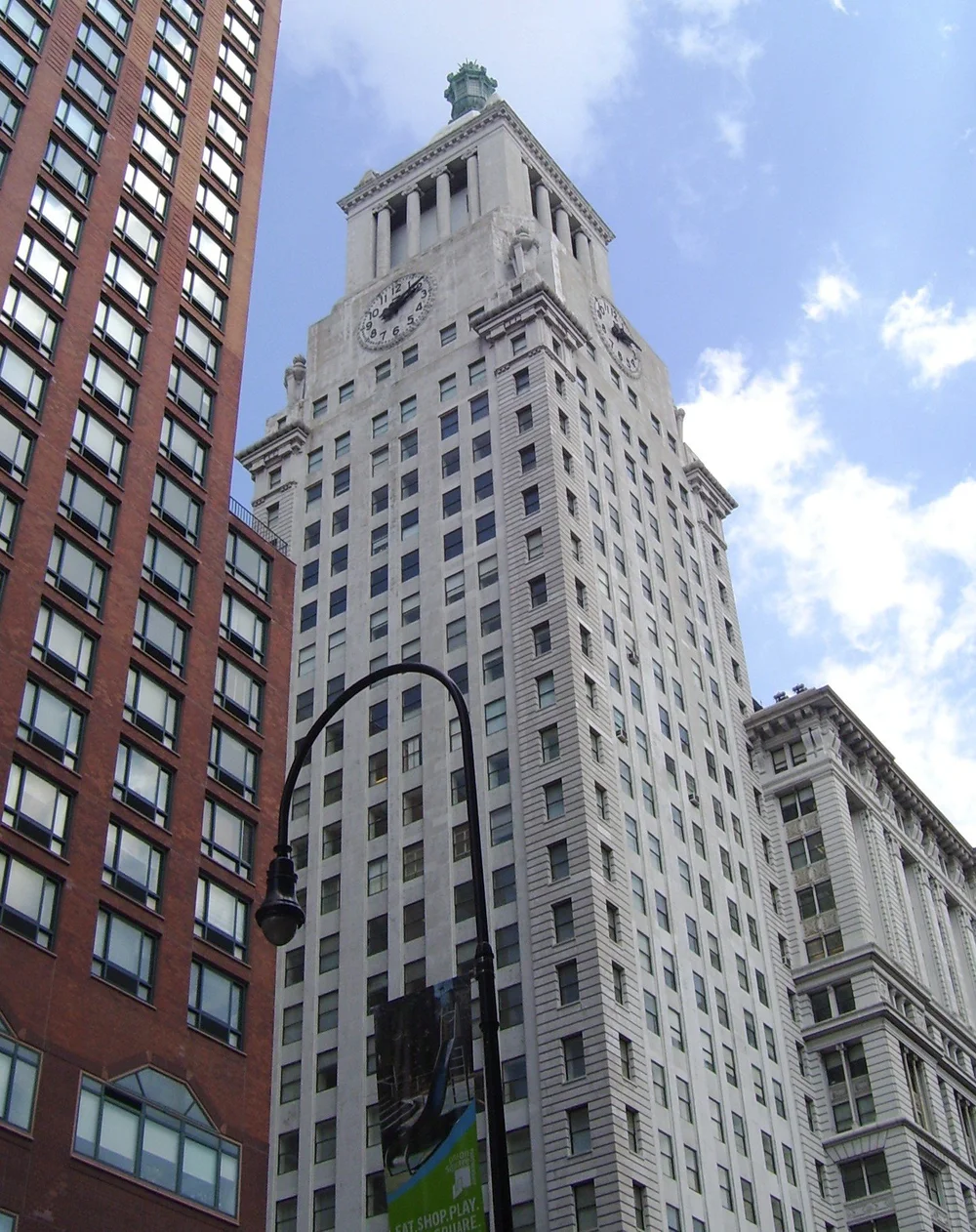
So I grew up inside Con Edison in a strange way. I remember those beautiful gold doors. I remember being little enough that everything seemed enormous: the hallways, offices, elevators, tower, clock, and the adults in suits who seemed to know my mother wherever we went. I remember running around a building responsible for helping power New York City without understanding how extraordinary that was. There were Christmas parties, visits to the office and trips high into the building. I wandered through corporate Manhattan in the ’90s, watching people move between offices and meetings, absorbing the mechanics of a massive American company long before I understood words like corporation, hierarchy, infrastructure or capital.
There always seemed to be another boss, another executive, another important person my mother wanted me to meet. I shook hands with people whose titles meant almost nothing to me at the time, people involved with electricity, infrastructure, energy, money and decisions affecting one of the largest cities in the world. To me, they were simply adults who knew my mother. That may be one of the strangest privileges of childhood: you can stand beside power without knowing that it’s power.
And my mother belonged there. She had started in the mail room and built a career inside that machine. I watched her navigate an institution that existed long before either of us and watched people respect her because she had earned her place among them. Long before I understood ambition, I had already seen what it looked like. She showed me that systems could be learned, that complicated machinery was still built and managed by human beings, that institutions were not gods, and that you could enter one at one level, understand how it worked and keep moving.
That is where the word power begins to split open for me now. Electrical power, institutional power, economic power and personal power were all occupying the same childhood landscape. There was also the power required to walk into a building through one door and refuse to believe that door determined how far you could travel inside it. My mother would commute from Westchester into Manhattan, toward Union Square and Con Edison’s headquarters at 4 Irving Place, while I grew up absorbing a lesson I would not understand until much later: movement changes potential into something real.
The building itself almost seems too perfect for the memory. New York City’s Landmarks Preservation Commission records that the Con Edison complex was built in stages from 1910 through 1929 and that its twenty-six-story tower was deliberately conceived as a symbol of electrical power and light. Corporate literature called it the “Tower of Light.” Its architecture contains illuminated clocks, a huge bronze-and-glass lantern and ornamentation incorporating suns, lamps, torches, lightning bolts and even representations of power-generating machinery. The tower was meant to illuminate the skyline and commemorate company employees who died during World War I. [1]
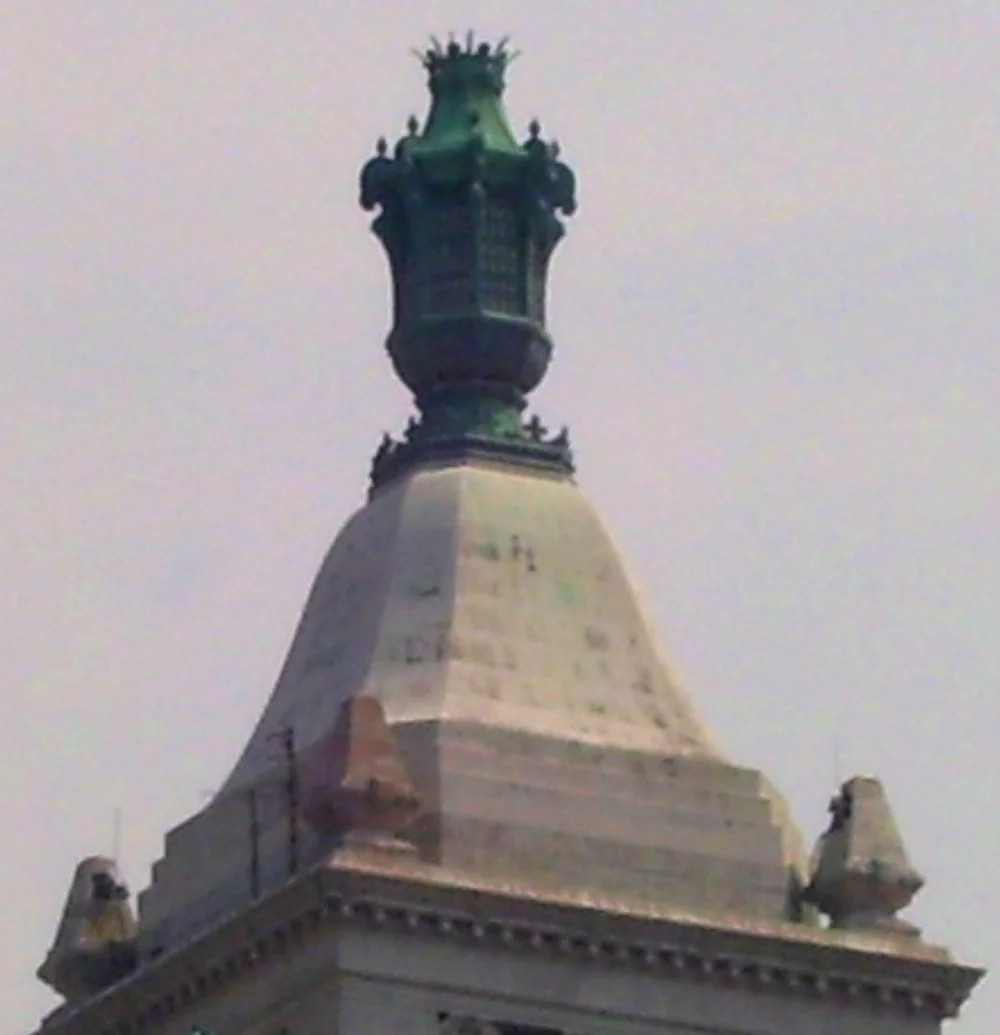
I had been running around inside a monument to electricity before I understood what a monument was.
Even those gold doors I remember have a history. The landmark report describes historic bronze-and-glass doors and bronze ornament throughout the building. As a child, I did not need any of that information. They were just the gold doors where my mother worked. But memory changes when knowledge catches up to it. What seemed enormous because I was small was actually enormous because the place represented something enormous: the infrastructure required to make a modern city function.
The history under those floors stretches backward into the electrification of New York itself. On September 4, 1882, Thomas Edison began operating his Pearl Street generating station in Lower Manhattan, supplying direct-current electricity to customers in a small part of downtown. The National Park Service describes Pearl Street as the first commercial power station of Edison’s emerging electrical system, while Con Edison traces its own electrical history through that early grid. In 1884, executives from several major New York gas companies met at 4 Irving Place and agreed to consolidate their businesses, beginning another branch of the history that eventually became Consolidated Edison. [2]
But history becomes dangerous when we reduce systems to one famous man standing beside one famous invention. Edison matters, but Edison did not build the electrical age alone. His laboratories themselves operated through teams of machinists, experimenters, engineers, draftsmen and specialists. Even the mythology of the solitary inventor begins breaking apart the closer you look.
That is where Lewis Howard Latimer becomes important to me.
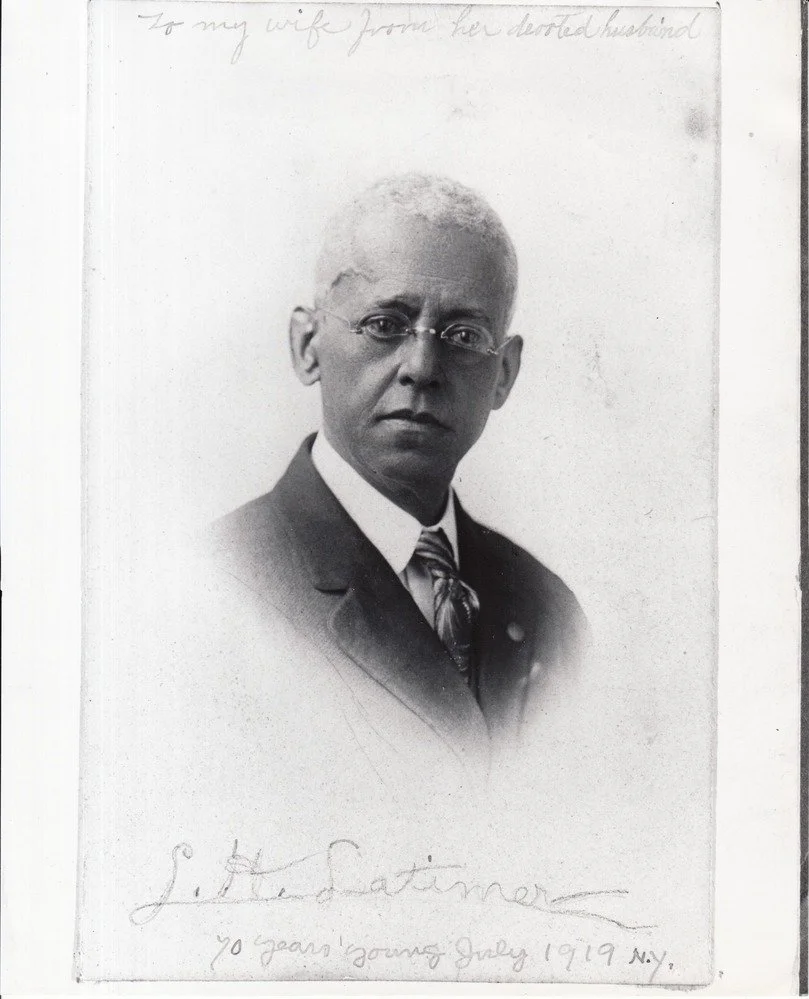
Latimer was the son of parents who had escaped slavery. He taught himself mechanical drawing, became an expert draftsman and worked with Alexander Graham Bell before entering the emerging electrical industry. He developed an improved process for manufacturing carbon filaments and later worked in New York for the Edison Electric Light Company as an engineer, draftsman and legal expert. He became a specialist in electrical-lighting patents and wrote Incandescent Electric Lighting: A Practical Description of the Edison System in 1890. In 1918 he became a charter member of the Edison Pioneers and was its only Black member. [3]
He was not Edison’s co-founder, and the truth is more interesting than making him one. Latimer represents something I keep finding whenever I look beneath American mythology: there is almost always somebody outside the famous photograph who understood the machinery. Somebody drafting the plans, solving the practical problems, maintaining the system, defending the patents, carrying the messages or making the invention usable enough that the rest of the country could eventually forget how difficult it had been to build.
That resonates with me because my mother began in the mail room. She began by moving information through a system inside a company whose entire purpose involved moving energy through another system. Messages traveled from floor to floor while electricity traveled through generators, cables, substations and transformers. Decades later, her son would build a life around transmitting things too: poetry, music, images, film, signals and frequencies. Different machinery, perhaps, but the same human impulse to move something from one point to another and hope it arrives with enough energy left to matter.
As a kid, I was fascinated by transformers. I learned about voltage and amps, about electricity moving through systems and changing before it reached wherever it needed to go. The basic principle still feels profound to me. Transformers allow alternating-current electricity to be stepped to higher or lower voltages, making long-distance transmission and local distribution practical. The United States electrical grid operates around sixty hertz, sixty cycles every second, with generation and enormous interconnected systems constantly working to remain synchronized around that frequency. [4]
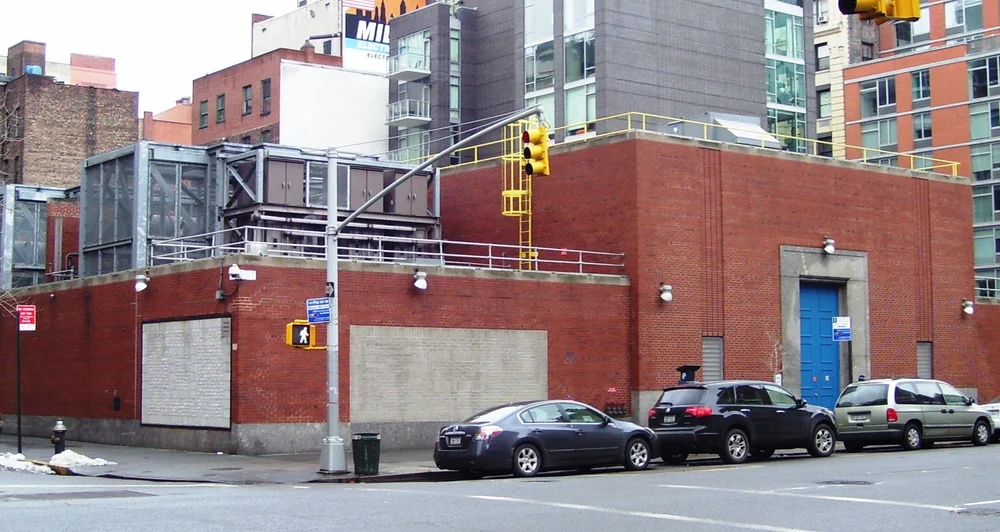
As a child, I understood the transformer much more simply. Power went in, something happened inside the machine, and power came out changed.
Years later, that sounds almost like alchemy.
Potential becomes movement. Voltage creates the possibility of movement, current is charge in motion, resistance pushes against it, and all of those relationships determine what the system can actually do. I don’t have to force those words into metaphor because I grew up around their literal meaning. Potential, current and resistance were already part of the physical world surrounding me before they became ideas I could apply to a human life.
There was another part of the grid near home: Indian Point.
The nuclear generating station stood along the Hudson in Buchanan, not far from Peekskill and the communities where so much of my understanding of home was formed. Indian Point Unit 1 began commercial operation in 1962. Units 2 and 3 followed in the 1970s; Unit 2 permanently shut down in April 2020 and Unit 3 in April 2021. The site is now undergoing decommissioning. [5]
When something enormous is part of the landscape from childhood, it can become strangely ordinary. The Hudson was there. The plant was there. The train tracks were there. Transmission infrastructure was there. New York City was glowing somewhere downstream. I did not walk around every day contemplating nuclear generation. I was a kid. But when I trace the circuit backward now, I realize how much of my childhood took place geographically between the production and consumption of power.
Power near home. My mother moving south. The Hudson moving south. Metro-North following the river. Electricity moving through an enormous network toward people who would flip switches without ever thinking about where the energy began. Every morning there were currents moving beside one another.
Manhattan showed me what happened when that current reached the other end.
New York at night is one of humanity’s great electrical performances. Office towers, apartment windows, subway platforms, streetlights, signs, storefronts, tunnels and entire blocks remain illuminated through an infrastructure most people never see. The grid disappears precisely because it works. You see the light, not the generator. You hear the music, not the transformer. You ride the train, not the substation. Modern life encourages us to experience the output while forgetting the system.
Then there is Nikola Tesla, whose story feels almost impossible to separate from New York once you understand the electrical century. The famous “War of the Currents” placed Edison’s direct-current system against an alternating-current architecture associated especially with Tesla and George Westinghouse. AC’s ability to move efficiently between voltage levels through transformers helped make it practical for long-distance power transmission and ultimately central to the grid that developed around us. [4]
Tesla fascinates me for another reason, though. He spent the final years of his life in the New Yorker Hotel, and on January 7, 1943, he died there at eighty-six years old, alone in room 3327 on the thirty-third floor. There is something almost unbearably New York about that image: a man whose work helped shape an electrified civilization ending his life alone in a Manhattan hotel while the city outside continued glowing. [6]
I do not romanticize the loneliness. Isolation can destroy a person just as easily as it can produce something beautiful. But I understand the temptation to retreat into an internal universe when the external one becomes too loud. Tesla spent his life thinking about fields, oscillation, resonance and invisible forces producing visible effects. Artists spend a lot of time trying to do something similar. We hear something that does not exist yet and then spend months or years building a machine capable of making somebody else hear it too.
That is where all of this begins reconnecting to my work.
When I use the word frequency, I do not mean it as decoration. A frequency is repetition through time. Sound is vibration traveling through matter. Electricity can become a signal, a signal can drive a speaker, a speaker moves air, moving air reaches the body and the brain turns that movement into experience. Somewhere between electrical current and human consciousness, vibration becomes music and music becomes memory.
I think about that kid walking through Con Edison with his mother. I think about the clock tower, the gold doors and the grown men and women whose jobs involved keeping invisible systems running. I think about Indian Point on the Hudson and the train heading south. I think about electricity changing voltage through transformers before becoming usable somewhere else. I think about my mother beginning in a mail room and moving upward through a company while teaching her son, without ever needing to lecture him about it, that complex systems could be understood.
Then I sit in front of audio equipment and manipulate frequencies.
Maybe that is why electricity keeps returning to my work. Maybe that is why trains keep returning. Maybe that is why systems, artificial intelligence, machines, geometry, sound, transmission and human consciousness keep colliding in what I make. I spent years assuming these were separate interests. The older I get, the more they look like different parts of the same circuit.
And now another transformation is happening.
Artificial intelligence is often described as though it belongs to some immaterial realm called “the cloud,” but intelligence running on machines has never escaped physics. The cloud is buildings, chips, transformers, transmission lines, cooling systems, generators, water, land and electricity. The International Energy Agency projects that data centers could account for roughly half of the growth in United States electricity demand through 2030. In 2026, Con Edison announced a record $3.9 billion investment in its New York City and Westchester electric-delivery system, including new underground and overhead transformers, cables and substation equipment. [7] [8]
The supposedly weightless future is once again asking an ancient industrial question: where does the power come from?
That question is technological, but it is also ethical. Every revolution loves to talk about the miraculous object on the surface. The light bulb. The telephone. The computer. The artificial intelligence. We talk less about the mines, land, labor, cables, water, energy, factories and human bodies underneath it. We celebrate the person whose name survives while thousands of people who built the surrounding system disappear.
That is why Latimer belongs in this story. My mother belongs in it too.
Not because their lives are equivalent, but because both remind me to look at the whole system. Look behind the invention. Look inside the building. Look at who carries information before they are allowed to make decisions. Look at who understands the wiring. Look at who maintains the infrastructure. Look at who starts somewhere nobody considers glamorous and learns enough about the machine to move through it.
My mother started in the mail room. I started as a kid running around those halls. Now I make art. The distance between those things no longer feels as large as it once did. Art is another form of transmission. Writing moves thought across distance. Film moves light. Music moves air. Digital systems move information through electrical signals. Human beings receive all of it and transform it again.
That might be what interests me most about a transformer now. It does not create energy out of nothing. It changes the conditions under which energy can travel and become useful. That feels closer to what artists actually do. We receive something: grief, memory, history, violence, love, fear, technology, childhood, a train ride along the Hudson, our mother walking through gold doors. We cannot erase what entered us. We can change its voltage.
We can transform it into something capable of traveling farther.
When I trace my own circuit backward, I see Westchester, the Hudson, Indian Point, Metro-North, Manhattan, Union Square, Irving Place, those gold doors, the clock tower and my mother moving through all of it. Behind her I see Pearl Street, Edison and the beginning of centralized electrical power in New York. Beside that mythology I see Lewis Latimer drawing plans, understanding the machinery and refusing to disappear from the story. Somewhere farther downtown and decades later, Tesla sits alone in room 3327 while an electrical city burns outside his window.
Then the current reaches me.
I am sitting here now writing, recording, building images and manipulating frequencies while another technological revolution begins demanding more electricity from the same world that once taught me what a transformer was. Artificial intelligence runs through data centers instead of childhood imagination, but somewhere behind the screen there is still a wire, somewhere there is still a substation, somewhere there is still a transformer humming, and somewhere there is still a human being keeping the system alive.
Maybe the vocabulary came later, but the current was already there.
Sources
- New York City Landmarks Preservation Commission - Consolidated Edison Building designation report https://www.nyc.gov/html/records/pdf/govpub/4678con_edison_desig_rep.pdf
- National Park Service - Thomas Edison biography and Pearl Street context https://www.nps.gov/edis/learn/historyculture/edison-biography.htm
- Smithsonian / National Museum of American History - Lewis Latimer https://invention.si.edu/invention-stories/innovative-lives-lewis-latimer-1848-1928-renaissance-man
- U.S. Department of Energy - The War of the Currents: AC vs. DC Power https://www.energy.gov/articles/war-currents-ac-vs-dc-power
- U.S. Nuclear Regulatory Commission - Indian Point Unit 1 decommissioning https://www.nrc.gov/facilities-safety/facility-finder/decommissioning/power-reactor/indian-point-unit-1
- PBS American Experience - Tesla https://www.pbs.org/wgbh/americanexperience/films/tesla/
- International Energy Agency - Electricity 2026: Demand https://www.iea.org/reports/electricity-2026/demand
- Con Edison - 2026 electric system investment announcement https://www.coned.com/en/about-us/media-center/news/2026/05-27/con-ed-invests-3-9-billion-in-system-upgrades
The story continues in sound. Metro-North to Nowhere ↗