

← Field Notes ← Back to Writing
Industry. Architecture. Machines in motion.
Field Notes / 002 ·
The Sky Was Never Empty
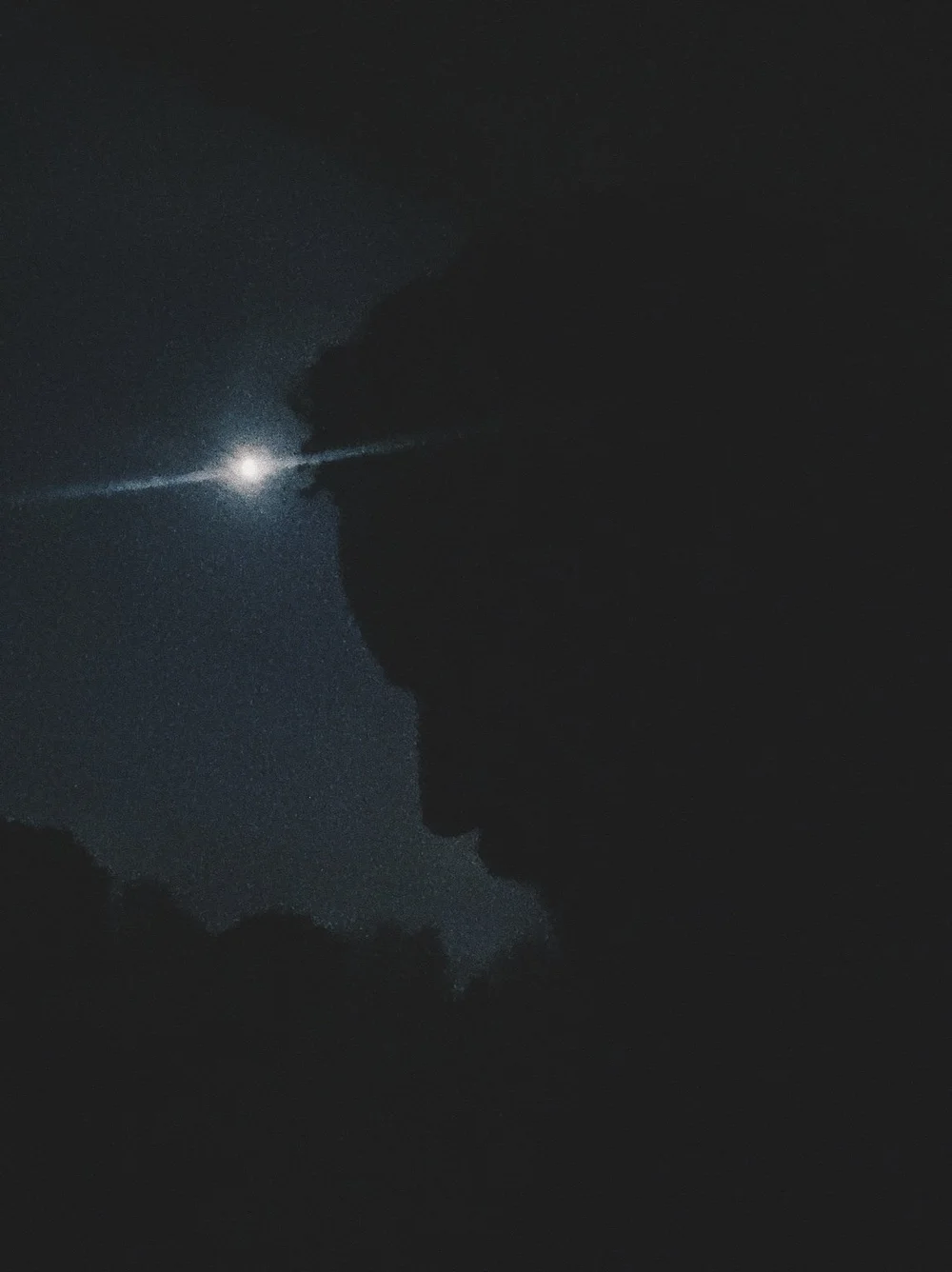
On missing time, inherited knowledge, and making room for the living.
There are moments in my life I cannot remember. Looking up at the sky gives me something steady to return to, something I cannot hurry. There is comfort in being able to look up and find a place to begin. I can spend a whole day surrounded by information and still need that. A light means something different once you learn how to find your way by it.
Read the full essay
Epilepsy has made me think about finding my way back. I wake up without knowing what happened. It doesn't feel like waking from unconscious sleep. There is no memory carrying me across the gap, no experience I can reach into and bring back. It feels like nonexistence. That is the word I have for it: the absence I can only recognize after I have returned.
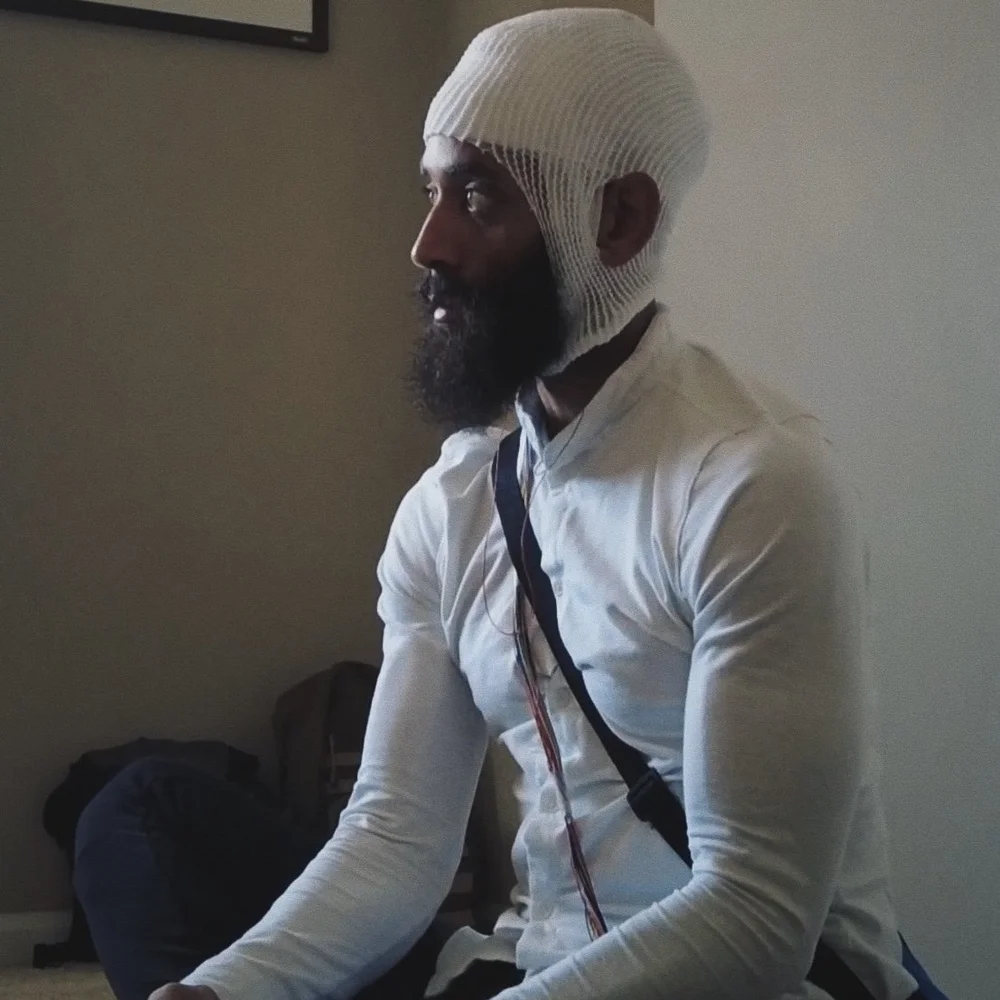
“The emptiness in the room is the real death.” I said that while trying to explain what the missing time feels like, and what it means to face it alone. There is nobody beside me who can tell me what they saw. I carry the fear that another seizure could be the one I don't return from. That possibility can be in the room with me while I am writing, while I am thinking about my children, while I am trying to make something that reaches another person.
I love being alive. I need that in the account, too. I have passion, faith, and work I want to do. I can be struggling to gather my thoughts and still know that I have something to say. Sometimes I can only get the fragments out. The feeling arrives before the sentence. I need help making a place for it, and I want to be able to ask for that help without having the struggle become the whole story about me.
This is where seizures are taking me in my work: into questions that stay with me after I close the page. What can I make with the time I have? How do I keep faith when I cannot account for every moment? I push through what I can, through willpower, prayer, and returning to the work when I am able. Rest belongs to that effort. So does accepting help. I want the work to carry the force of being here, loving life, and still choosing to build inside the uncertainty.
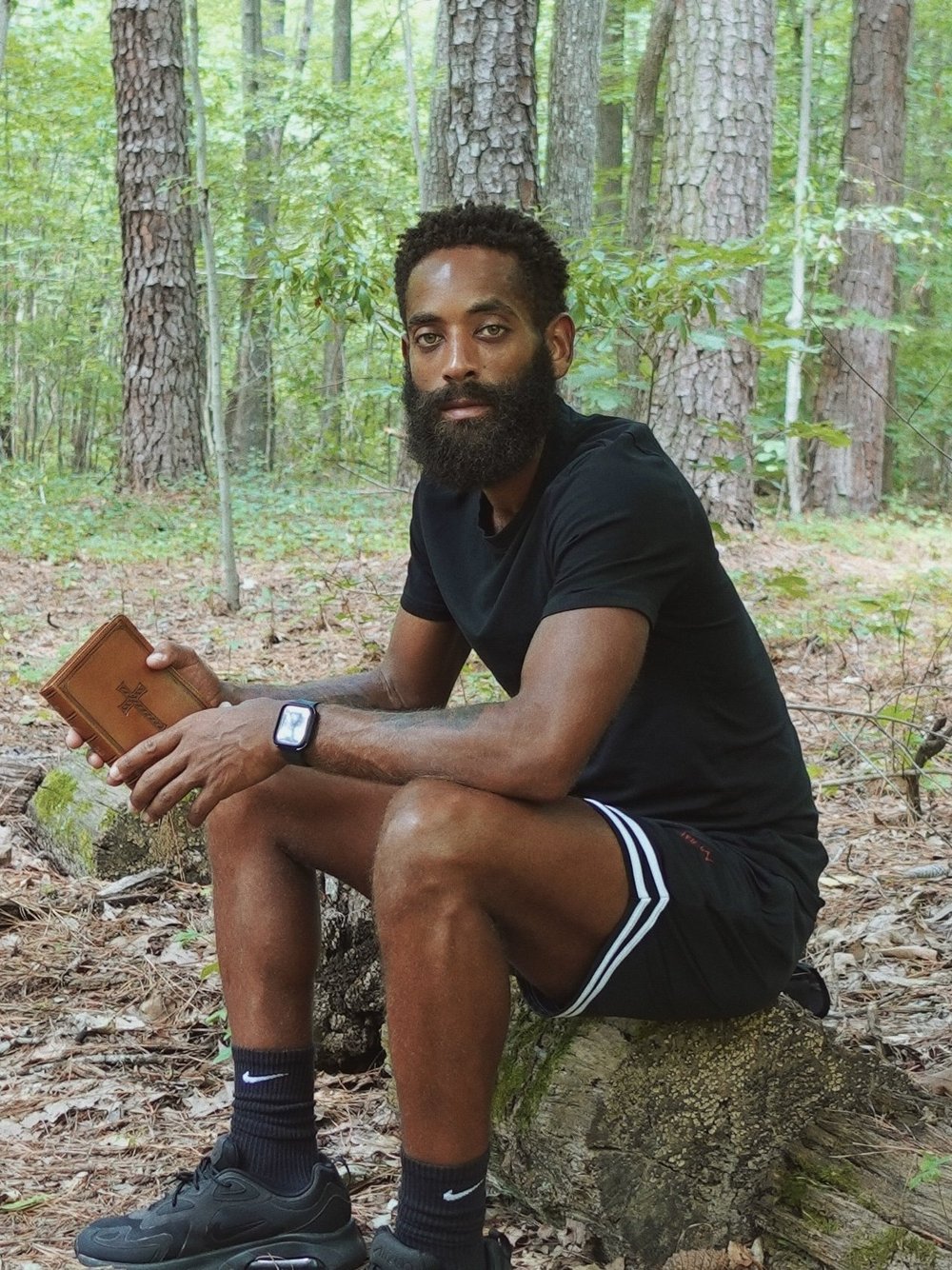
When I look up, I think about other people who needed a direction. Polaris isn't the brightest star in the sky. It lies close to the north celestial pole, and the outer two stars of the Big Dipper's bowl point toward it. Learning that means somebody watched, remembered, and taught somebody else where to look. 1 Knowledge becomes an inheritance through that exchange. The sky did not become useful when we learned to put a machine above it.
People seeking freedom from slavery could use the night sky to orient themselves. They also needed knowledge of waterways, terrain, and people, and judgment under conditions I will never fully know. Routes could lead north, toward Mexico or Spanish Florida, or into refuge closer to home. Many people began their escape without help. 2, 3 I want to remember the person making that decision: someone with a life they wanted to live, someone who had people they wanted to see again.
I've been thinking about the codes and the messages carried along the way. What a song can hold, what one listener understands and another misses. Accounts of Harriet Tubman's life describe her using songs to communicate. 4 That makes me listen differently to the relationship between a voice and the people it is trying to reach. A song can carry grief, belief, memory, and something a listener needs to act on. My own music and poetry have made me care about how much can travel inside a line.
I want to be careful with what I call history. The familiar Underground Railroad quilt-code system lacks documented firsthand accounts establishing it. “Follow the Drinking Gourd” appeared in print in 1928, and its familiar instructions cannot simply be treated as a verified antebellum map. 2, 3 Oral history deserves attention and context. Listening to ancestors asks me to find out what survived, who carried it, and how the account changed along the way. I want to honor the people carrying a story without supplying evidence I do not have.
Here in Virginia, the Great Dismal Swamp gives me another way to think about escape. Across the Virginia–North Carolina border, people who freed themselves from slavery built settlements on interior islands. Some passed through. Others made homes, including communities that lasted across generations. 5 I think about the knowledge required to make a life there: where to build, what could be gathered, who was approaching. I think about a parent trying to keep a child safe while giving that child something beyond fear to live for. Those are questions I bring to the history, questions I still need to learn how to answer responsibly.
The land already held Indigenous histories. The Nansemond Indian Nation tells its own account of its Nansemond River homeland, colonial displacement, and the movement of some families toward the swamp. 6 This is a living people speaking about its history. That voice needs to be present when I try to understand the place. I want the names, the distinctions, and the knowledge that can be lost when somebody else's landscape becomes an image in my work.
Other routes require other histories. The Black Seminole and Seminole journeys to Mexico extend the map beyond a simple movement north. Louisiana Creole communities carry distinct cultural identities, languages, and histories. 7, 8 I want to follow those connections carefully, with people who know the places and can change what I think. Collaboration has to give someone more than a place in the acknowledgments. It has to let their knowledge affect the shape of the work.
I keep returning to mothers and Black women, to what becomes invisible when an account only notices them through somebody else's need. The feeding, raising, organizing, teaching, nursing, and creating. The name that disappears while the work remains useful. I want to know what they wanted for themselves, what made them laugh, what they made when they had room to make it. Praise for endurance should lead us to ask why so much endurance was demanded, and what care is being returned now.
My mother and I have a book together. Her words are beside mine. That matters to me because honoring someone can become visible in the record: a name, a credit, a voice that gets to finish its own sentence. It also has to become visible in our lives. Listening while the person is here. Giving care back. Making room for rest and for a life that has its own purpose. I want my work to help keep those things in view.
That brings the Black Panthers into the work for me. Their free breakfast programs, health clinics, and schools put care into daily practice. Ericka Huggins's leadership at the Oakland Community School belongs in that history. 10 So does the work of people preparing food, teaching children, and helping a neighbor get through another day. I want to remember the movement with those hands still visible. Power has to be answerable to the people whose lives it claims to change. A child should be able to feel its meaning before being asked to explain its politics.
Fred Hampton's coalition work gives me something to carry into that question. In Chicago, the Panthers built an alliance with the Young Lords and the Young Patriots across racial and ethnic lines. 11 I think about the effort inside that: people having to meet, listen, organize, and recognize a shared need while keeping their own histories. When I say I want to write for my people, I want that responsibility close. I want a voice rooted enough to know where it comes from and open enough to recognize somebody reaching toward it.
Assata Shakur brings me back to who gets to tell the story. Her autobiography places her account of her life into the record. 13 The existence of that voice matters when I think about how a person becomes known through institutions, headlines, and classifications. I want to read carefully, to know which account I am hearing, and to make room for a person's own words. Kathleen Cleaver's communications leadership and Afeni Shakur's Panther work also belong here. 12 Black women were making the message and doing the organizing. Their names need to travel with that work.
Tupac belongs in this conversation as an artist whose work makes me think about the force tenderness can carry. “Dear Mama” turns my attention toward the mother inside the story, and Afeni was a political actor with a life and work of her own. She later founded the Tupac Amaru Shakur Foundation. 12, 14 I think about that continuity between organizing, art, and making a place for someone else to create. I want my own music and writing to have room for that range: conviction, pain, affection, contradiction, and the love that makes someone keep speaking. I want my sons to hear the life in my voice.
Reading about Tubman's severe head injury and the seizures and other symptoms that followed gives me a reason to slow down. 9 Epilepsy is part of my life; her experience remains her own. I want to keep her faith, knowledge, decisions, and relationships in the account alongside the injury. A condition can become the first thing someone learns about you, and still leave so much of you unknown. I feel that distance when I try to explain what happens to me and then return to the work I want to make.
Fatherhood gives these questions somewhere immediate to land. I want my sons to inherit love they can trust and knowledge they can use. I want them to know that asking for help belongs to being strong. When I say breaking curses, I think about an inherited hurt reaching me and what I do with it next. Learning to respond differently. Telling the truth when I would rather defend myself. Making an apology real through what changes afterward. I want my children to be able to feel the difference in the life we share.
This is part of what brings me to intelligence and power. I think about who gets to define a person, who controls the account, and how much room remains for that person to change. The possibility of superintelligence can feel so immense that I begin to withdraw, as though the future has already been written somewhere I cannot reach. I have to leave room for uncertainty and for what I can actually know. I can describe the feeling of inevitability without giving it the authority to decide my life.
If machines eventually exceed us across a much wider range of intellectual tasks, I want to know what that capability will help us protect. Who gets to question a decision? Who can correct a record? What happens when a person's illness, neighborhood, history, or worst moment becomes the explanation that follows them everywhere? I want my sons to be able to try a life, discover something about themselves, and change direction. A prediction should leave room for the person to become someone it did not foresee.
I can imagine tools helping us find an answer, recover time for one another, and create something we couldn't make before. I am using help to bring these words together. That possibility matters to me because I know the difference between having something to say and having the capacity to carry every part of it alone. I want assistance that respects the person doing the work, the people whose knowledge enters it, and the lives affected by where it goes.
But a voice preserved in a recording does not fill every empty room. A record of love leaves us with the responsibility to love someone here. I want people close enough to hear the unfinished thought, close enough to let me gather the words without deciding they already know what I mean. I want to offer that patience, too. When I write about an intelligent future, I am thinking about whether it will give us more time for those encounters, more freedom to care for one another, and more ways to be present.
I am writing for my children and my people, with the understanding that my voice has limits and can still reach someone. There are names I know, names I need to learn, and accounts I need help understanding. A person carrying a family story should have a say in how it enters the work. The finished piece should carry evidence of the people who helped make it possible. I want the writing to leave room for that exchange rather than arrive pretending the work of listening is finished.
The stars are still there. There is history beneath my feet and there are people to love now. My music, poetry, films, and writing keep meeting in that space, trying to carry experience forward and make something another person can use. I am here, alive, and trying. I want to leave my sons a direction they can trust, enough freedom to find their own, and work that lets them hear how much I loved this life.
Sources
Source numbers identify historical and factual context. The personal reflections are Rashad Houston’s.
- NASA — What Is the North Star and How Do You Find It?
- NPS — Underground Railroad FAQ
- NPS — North Star to Freedom
- NPS / Rev. Dr. Donna Cox — The Superpower of Singing
- USFWS — Great Dismal Swamp: About Us
- Nansemond Indian Nation — Tribal History
- Seminole Nation Museum — The Exodus to Mexico
- NPS — Creole Identity
- NPS — Harriet Tubman's Boston: 1890s
- Smithsonian NMAAHC — The Black Panther Party
- PBS Independent Lens — The First Rainbow Coalition, corroborated by Chicago History Museum.
- Museum of Social Justice — Comrade Sisters
- Chicago Review Press — Assata: An Autobiography.
- 2Pac official site — Dear Mama and Tupac Amaru Shakur Foundation.