

Sous le crâne, le feu · October 22, 2026
The Electric Man
Brain Illness, Isolation & Divine Power
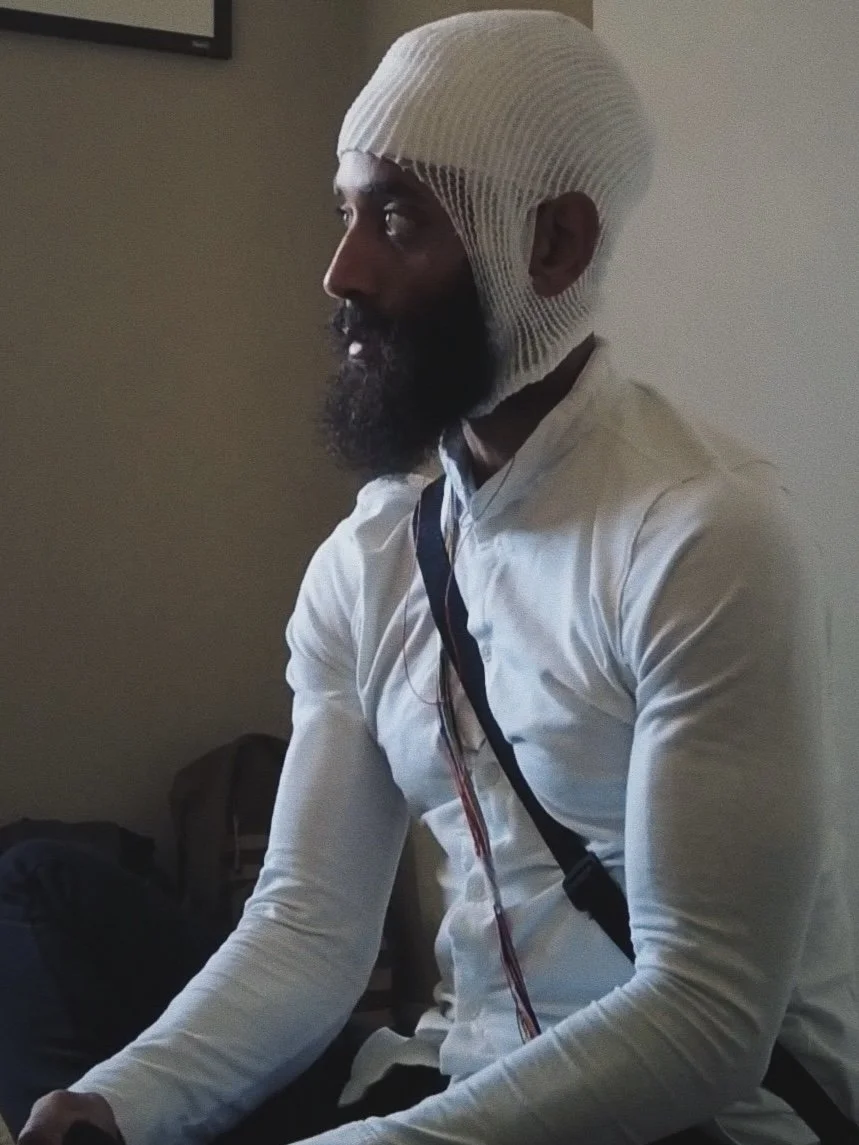
They wrap my head in gauze like they are trying to keep the electricity from escaping. Wires run down my body. Machines wait for something to happen. Somebody somewhere is watching a screen, hoping my brain will betray itself long enough for them to understand it. I sit still. That is the strange part. From the outside, so much of suffering looks like sitting still.
I remember the cold gel against my forehead. The feeling of somebody else’s hands preparing my body for an investigation I never asked to be part of. I remember closing my eyes, trying to hold on to faith while stepping into something I knew nothing about. There is a particular kind of fear that comes with surrendering yourself to a professional. You trust that they know what they’re doing. You trust the equipment. You trust the science. But none of those things can promise you that you’ll leave with your life the way it was before.

I was in Honolulu, Hawaiʻi. Before the wires, before the medication, before the years of trying to explain what was happening inside my head, there had been a party at my house. It was a good night. Friends from work had come over. People were laughing, enjoying themselves, living the kind of ordinary life you never think to appreciate until ordinary becomes something you have to fight for.
I remember not feeling well. That’s all I knew how to say. I don’t feel well. I sat down on the steps. And then there is nothing. The next thing I remember is waking up surrounded by firefighters. Imagine that. One moment you’re at home with your friends. The next, strangers are standing around you, and somebody has to explain what happened to your own body.
I was told I’d had a seizure. Told. Because I hadn’t witnessed it. I hadn’t experienced it in the way people imagine an experience. My body had gone somewhere my memory couldn’t follow. Later I learned that what I had been feeling that night was an aura. That was my introduction to epilepsy. Not a diagnosis. Not a medical textbook. Not a neurologist explaining electrical activity in the brain. A feeling I couldn’t name. A staircase. And a piece of my life that disappeared.
I sometimes wonder what it means to be present in a body that can continue having experiences without allowing you to remember them. Where do those moments go? Who owns the hours you cannot account for? What happens to the person you were during the time you cannot remember being anyone?
The EEG came afterward. The cold gel. The wires. The uncertainty. The beginning of a relationship with machines that would eventually know things about my brain that I did not. And the beginning of a relationship with my own body that would never feel quite the same again.

Nobody can see electricity. They only see what it leaves behind. The missing hours. The ruined mornings. The exhaustion. The conversations I cannot remember having. The strange looks when I ask a question twice. The moment somebody realizes I am not following them anymore. Doctors call these things symptoms because medicine needs nouns. I have lived with them long enough that they feel more like weather. Except weather eventually passes. I have spent years waiting for the sky to clear. And there are mornings when the storm is already there before I open my eyes.
For years I thought strength meant defeating the storm. I wanted to conquer my brain, conquer the seizures, conquer every weakness they exposed. I wanted my body to obey me. I wanted to run farther, work harder, think faster, make more money, raise my sons, build something permanent and prove that whatever was happening inside my skull had chosen the wrong man. But electricity does not negotiate with pride.
It has dropped me to the floor. It has erased pieces of my life. It has made driving dangerous, work complicated, and independence conditional. It has forced me to calculate distances other men simply travel. There are days when twenty miles might as well be another continent. There are days when being a father becomes a transportation problem, when groceries become mathematics, when the future shrinks down to the amount of money left in an account. That humiliation has its own voltage.
You start asking questions nobody prepares a man to ask. What am I worth when my body will not cooperate? What kind of father am I when I cannot always get to my children? What happens to masculinity when independence becomes something you have to borrow? What happens to hope when every ordinary thing has a price attached to it and you are staring at zero?
I had seen how disabled people were treated before I became disabled myself. I had seen the impatience. The assumptions. The way people could look at somebody struggling and decide, without knowing anything about their life, what they should be capable of doing. But I never understood what it would mean to live with an illness nobody could see. An invisible illness. Those two words sound almost gentle.
There is nothing gentle about having to prove that you’re suffering. Nothing gentle about explaining that you’re exhausted when you haven’t done anything anybody else considers exhausting. Nothing gentle about telling somebody you cannot do something and watching their expression change because you don’t look sick enough to justify disappointing them.
I don’t feel well. Four words. Four words that became less acceptable the longer I lived with this condition. At first, people might understand. They might express concern. They might ask how you’re doing. But time passes. They get tired of hearing it. They want you to get better. Not necessarily because they understand what getting better would require, but because your illness has become inconvenient to the life they expect you to participate in.
They want the old version of you. The version who could go anywhere. The version who could work without interruption. The version who could make plans without wondering whether his brain would allow him to keep them. The version who didn’t have to explain himself. I wanted that man back too. I still do sometimes.
But what happens when the people who say they love you begin treating your limitations as though they are choices? What happens when the people closest to you become another audience you have to convince? I never imagined how many people would exit my life because they couldn’t understand what was happening inside me. Family. Friends. People I thought would remain.
And I don’t mean that everybody was cruel. I don’t mean that everybody understood what they were doing. Sometimes people simply stopped showing up. Sometimes the distance grew so slowly that by the time I noticed it, there was already too much silence between us. Sometimes I wondered whether I had become too difficult to love. Not because I stopped loving people. But because loving me now required understanding something they couldn’t see.
As my brain illness progressed, I began to feel my wife distancing herself from me. I was already losing pieces of myself to something I couldn’t control. My memory. My independence. My ability to move through the world without wondering whether my own brain would interrupt me. And somewhere in the middle of all that, I felt the distance growing inside my marriage.
Eventually, she wouldn’t even sleep in the same bed as me. I remember what that distance felt like. To be suffering from something happening inside my own head, something I couldn’t escape even when I closed my eyes, and to feel alone in the very place where I was supposed to find comfort. There is a loneliness that comes from sleeping alone. And then there is the loneliness of knowing someone is there, but no longer beside you.
My oldest son, Omari, checked on me, though. He made sure I was all right. I think about that sometimes. How a child can recognize something in his father that the adults around him seem unable to reach. How the person you’re supposed to be protecting becomes the person checking to see whether you’re okay. I was still his father. I still wanted to be strong for him. I didn’t want him carrying the weight of what was happening to me. But I remember that Omari cared enough to check. And that mattered.
As my illness grew worse, the distance in my marriage grew too. Eventually, the divorce came. I don’t pretend to know everything she was feeling. I can only tell you what it felt like from where I stood. I wasn’t only grieving a marriage. I was grieving the life I thought I would have, the person I had been before the seizures, and the future I had imagined for my family.
The sicker I became, the more alone I felt. And when the marriage ended, the illness was still there. There was no recovery period from one before having to face the other. I had to learn how to live with both. And through those years, I kept coming back to something I couldn’t ignore. My son had checked on me. In a life where so many people seemed to be moving farther away, Omari had come closer.
I don’t know whether people understand how much that changes a person. You stop explaining. You stop asking. You stop expecting anybody to understand. Eventually, isolation stops feeling like something happening to you and starts feeling like the only place where you don’t have to defend yourself. You become careful about what you reveal. Careful about who gets access to your suffering. Careful about who you trust with the parts of yourself that are already difficult enough to carry.
And the worst part is that the loneliness doesn’t always disappear when people are around. You can sit in a room full of people and feel completely absent. You can have conversations, smile, answer questions, and still feel as though you’re somewhere behind a wall nobody else can see. For more than a decade, I have lived with versions of that loneliness. As a man. As a father. As somebody who still wants to be loved without having to submit evidence of his suffering.
I love my sons. I want to watch them grow. I want to be present for the ordinary moments that make up a life. I want to show up without having to calculate whether my body will cooperate. I want to be able to say I’ll be there and know that I can keep my word. There is a particular grief in loving your children and knowing that love alone cannot overcome every physical limitation.
People speak about fatherhood as though presence is simply a decision. Show up. Be there. Do the work. I believe in those things. But what happens when showing up requires a ride you cannot afford, a body that will not cooperate, or a morning that hasn’t already been taken from you? What happens when you have all the love in the world and still cannot make the distance disappear? I have spent years trying to reconcile the father I want to be with the limitations I never chose. And I am tired of feeling that my worth as a man must be measured against the things my illness makes difficult.
I know what it feels like to become an experiment in my own life. Electrodes on my head. Medication in my blood. Doctors studying patterns. Machines translating the invisible into lines on a screen. I have spent years watching science try to explain me back to myself. Sometimes it helps. Sometimes the explanation is only another word for something I already knew hurt.
And sometimes the machines follow you home. I have spent days wearing EEG equipment while being monitored on video. Sitting in my own space, trying to do virtual work, trying to continue living while my brain was being watched for something to go wrong. Think about the contradiction. You spend your life trying to prevent seizures. Then you find yourself attached to equipment while somebody waits for your brain to produce the very event you’re afraid of.
Not because they want you to suffer, but because they need to understand what is happening. I understand that. I understand why the science matters. But understanding the reason doesn’t erase the experience. There is something strange about becoming a subject of observation in your own home. The wires are there while you work. The possibility is there while you rest. The awareness that your body might betray you is there even when nothing happens.
You begin to understand how much of your life has been organized around anticipation. Not simply the seizures themselves. The waiting. The wondering. The question that follows you into every room. What if it happens now? What if it happens here? What if I’m alone? What if nobody understands what’s happening? What if I don’t come back the same?
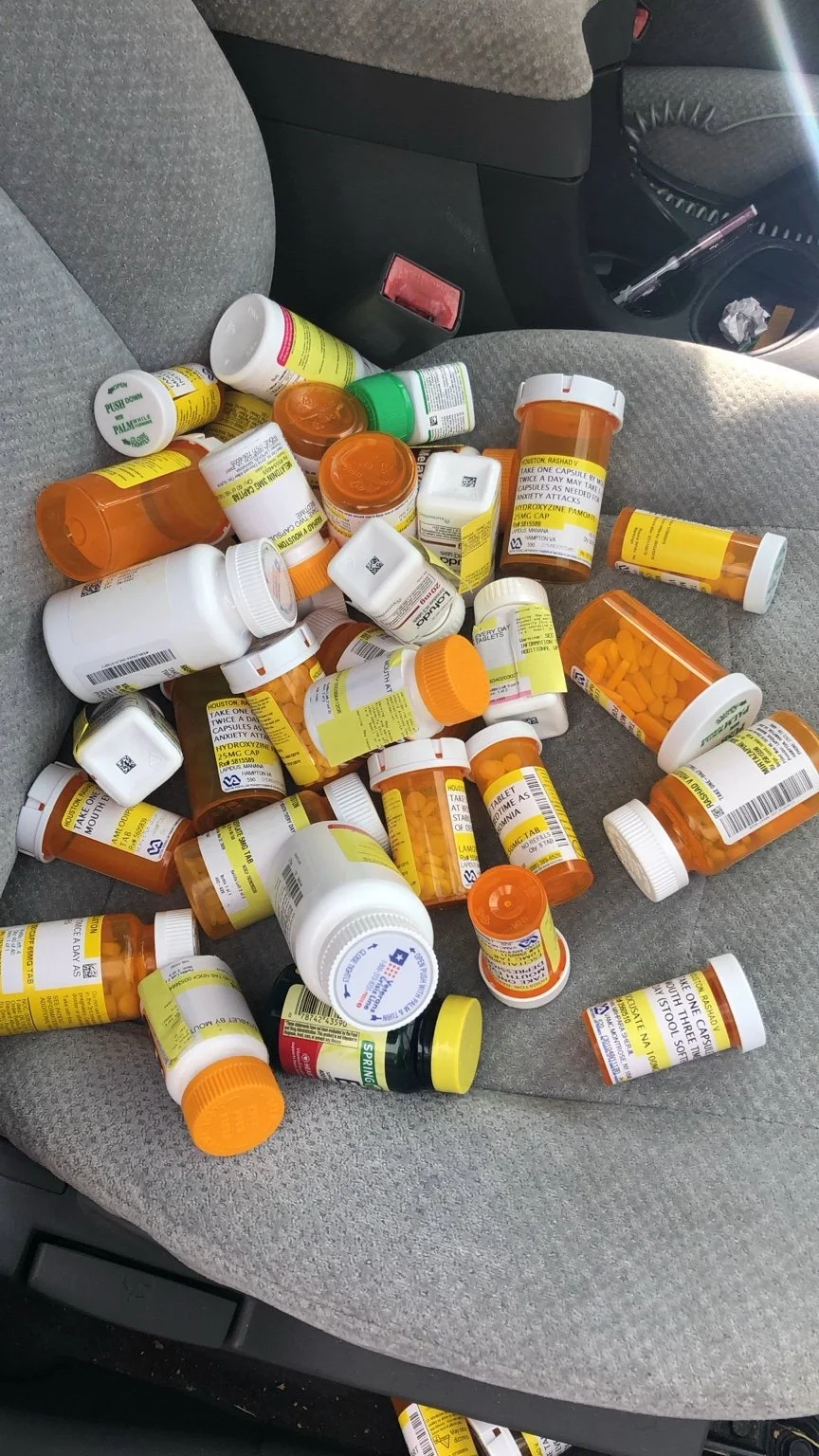
Then there are the medications. The bottles. The vitamins. The schedules. The trials. The errors. The adjustments. The hope that maybe this one will work. Maybe this combination will make the mornings easier. Maybe this time I’ll be able to live without feeling as though my entire life is organized around preventing another neurological event. And then another appointment. Another conversation. Another possibility. Another pill.
I recently sat with my psychiatrist and my neurologist on consecutive days. I was already feeling low. Sad. Exhausted. Discouraged by the weight of everything. And once again, the conversation turned toward medication. I know that clinicians offer medication because it can help people. I know there are people whose lives have improved because of it. I am not denying that.
But I need people to understand what it feels like to be the person sitting on the other side of that conversation after years of trying things. When you’ve spent so much of your adult life swallowing pills, managing symptoms, adjusting to side effects, and hoping for relief, the suggestion of another medication can sound less like a new beginning and more like the continuation of a sentence you never agreed to serve.
I wanted to be heard. Not merely evaluated. Not reduced to a mood. Not treated as though sadness automatically means something has gone wrong with my thinking. Sometimes I am sad because my life has been difficult. Sometimes I am down because I am lonely. Sometimes I am exhausted because I am in pain. Those feelings deserve to be understood as human experiences, even when they also require medical attention.
I don’t want every emotion translated into another prescription before anybody has listened to the story behind it. I want a conversation. I want somebody to ask what living this way has cost me. And I want them to stay long enough to hear the answer.
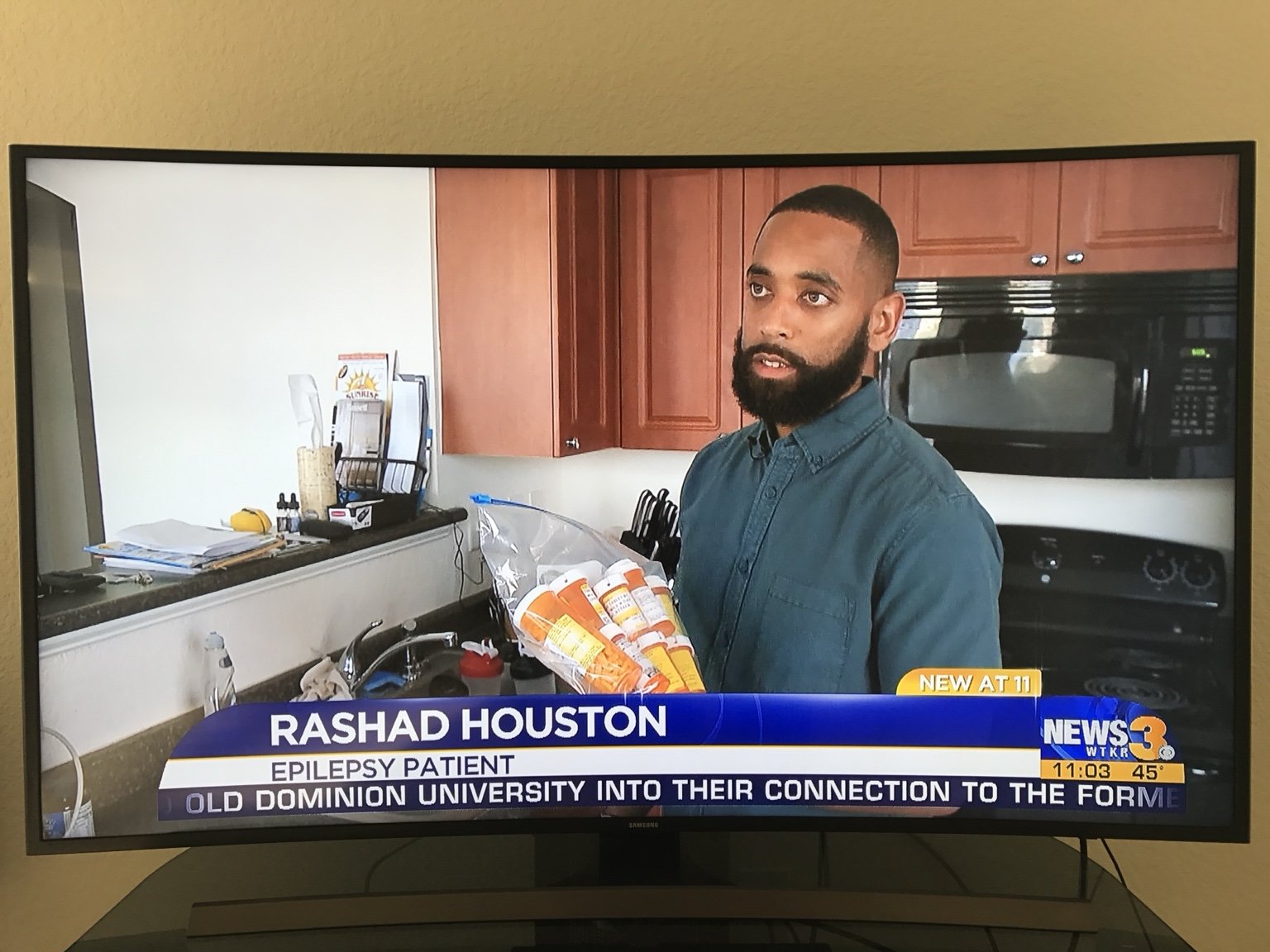
Back in 2017, I stood in front of a television camera in Virginia and spoke publicly about using cannabis for medical purposes. I knew what I was saying. I knew there were legal risks. I knew there were people who would judge me. I knew there were people who would hear the word cannabis and stop listening to everything else. But I was tired of being silent.
I was tired of suffering privately while other people decided what kind of relief I was allowed to seek. I was fighting for access. For choice. For the possibility of finding something that, in my experience, offered hope when so much else had left me discouraged. I wasn’t asking anybody to declare cannabis a miracle. I wasn’t claiming that what helped me would help everybody. I was saying that I was living inside a body that hurt, and I wanted some agency over how I tried to survive.
I went on the news. I showed my face. I spoke openly. And something happened that I didn’t expect. People recognized me. Strangers approached me in public and thanked me for speaking. Some told me they were glad somebody was willing to challenge the system. Even police officers shook my hand and encouraged me to do what I needed to do.
Think about that. I had people I didn’t know recognizing the seriousness of my fight. And at the same time, I had people close to me questioning the choices I was making to find relief. That contradiction has never entirely left me. Because when you’re suffering, disagreement can feel different.
Somebody else might see a debate about cannabis. A debate about law. A debate about morality. A debate about whether somebody should or shouldn’t use a particular substance. But I was living with the consequences of my own body every day. I was the one waking up in pain. I was the one losing time. I was the one trying to manage medications that I felt were affecting my mood and my will to keep going.
So when somebody told me they didn’t think I should use cannabis, I didn’t always hear concern. Sometimes I heard something much darker. I heard: I’d rather you keep suffering than try something I don’t approve of. And I would ask myself, what does that say about love? What does love mean when somebody can watch you struggle and still insist that their comfort with your choices matters more than your experience of pain?
I know people can disagree out of genuine concern. I know fear can make people protective. I know somebody can love you and still misunderstand what you’re going through. But knowing those things intellectually doesn’t erase the hurt. It doesn’t erase the years. It doesn’t erase the loneliness of feeling that the people closest to you have become strangers to the reality you’re living.
And it doesn’t erase the damage that happens when a person begins questioning whether the people who say they love him actually understand what it takes for him to remain alive. I have carried those questions for years. They have changed how I trust. How I love. How much of myself I reveal. How quickly I withdraw when I feel misunderstood.
There are mornings when I wake up and want my life to end. I am not going to disguise that sentence to make anybody comfortable. I am not going to turn it into a metaphor. There are mornings when I am so tired of the pain, the uncertainty, the loneliness, and the endless negotiations with my own body that I don’t want to continue experiencing life this way.
And I say that as a man who still wants to live. A man who loves his sons. A man who wants to watch them grow. A man who still has music to make. A man who still wants to write books, create films, learn languages, travel, and experience a world larger than the limitations of his illness.
That contradiction is real. I can want to live and still be exhausted by living. I can love my children and still struggle to find the strength to face another morning. I can believe there is beauty in the world and still feel trapped inside a life that has become painful.
I have wondered whether wanting an end to suffering makes me selfish. I have wondered whether continuing to endure it is something people expect from me because they don’t have to feel it themselves. People are quick to celebrate resilience. They love a survivor. They love a comeback. They love the story of somebody who endured the impossible and emerged stronger.
But what happens when the survivor is tired of surviving? What happens when there is no triumphant ending? When the person is still sick? Still hurting? Still trying to make rent? Still trying to get to his children? Still waiting for a morning when he can wake up without feeling as though his body has already spent all his strength?
People don’t always know what to do with that version of survival. The version that isn’t inspiring. The version that doesn’t make a good speech. The version that looks like a man sitting alone in a room, trying to convince himself to make it through another day.
I don’t want to be somebody’s inspirational story. I want my life. I want my body to cooperate. I want to be able to make plans without treating every promise as a gamble. I want to be able to love people without wondering whether my illness will eventually become too much for them.
I want to be able to say I’m not feeling well and have that sentence be enough. Not an excuse. Not an accusation. Not an invitation for somebody to question my character. Just the truth. I don’t feel well. And I shouldn’t have to prove my humanity every time I say it.
There have been days when I’ve tried to record music while my head was pounding. Days when an aura was there, when I knew something might be coming, and I was still trying to hold on to an idea. A verse. A melody. A sentence. A sound. Something I wanted to leave behind in the world.
There is a photograph of me trying to create during one of those periods. To somebody looking at it without knowing the story, it might look like an artist at work. A man in a recording space. Somebody making music. But I know what was happening inside that moment. The headaches. The auras. The uncertainty. The struggle to remain present long enough to finish something.
That photograph is another kind of medical record. Not because a doctor took it. Not because it measures electrical activity. But because it documents what the machines cannot fully explain. The effort required to remain myself. To create something while my body is fighting me. To make sound when my own nervous system has become a source of fear.

I have spent years trying to find ways to turn that experience into something other than silence. Poetry. Music. Film. Writing. Sometimes the work comes from anger. Sometimes grief. Sometimes curiosity. Sometimes I create because the alternative is sitting alone with everything I cannot change. And sometimes I create because I still believe there is something inside me worth sharing. Something beyond the diagnosis. Beyond the medications. Beyond the appointments. Beyond the stories people tell about who I am.
But there is another side to electricity. Electricity destroys, but also illuminates. The same force capable of knocking a body down can carry a voice across the planet. It can light a city. It can awaken a machine. It can turn sand into computation and darkness into an image. Human beings have spent centuries learning how to survive forces powerful enough to kill us, and somewhere along the way we learned how to build civilizations with them.
Maybe that is what I am learning to do with myself. Not conquer the electricity. Not pretend it isn’t there. Not pretend that every seizure has taught me something valuable. Not pretend that pain is a gift. But understand that I am still a thinking, feeling, creating human being inside the body where all of this is happening.
Sometimes I wonder whether the current running through my veins belongs to something beyond this place. Something beyond the explanations. Beyond the measurements. Beyond the boundaries of what science can presently describe. I think about consciousness. About memory. About the strange fact that a human being can disappear from his own awareness while his body remains here.
I think about what it means to be alive when your experience of being alive can be interrupted without your permission. I think about the fire inside my skull. And sometimes I imagine it reaching beyond this body, beyond this world, beyond everything I have been told is possible. I don’t claim to know what it means. I don’t claim that epilepsy has given me access to some higher truth. I know what the doctors call it. I know what it has done to me.
But I also know that living with an unpredictable brain has forced me to ask questions about existence that I might never have asked otherwise. People speak of heaven and hell as places waiting for us after death. I have lived through days when this world felt like hell already. Not because everything in the world is terrible.
There is beauty here. There is music. There is the ocean. There are my sons. There are moments of laughter and discovery and love. But there is also a kind of suffering that can make the world feel like a place you have been sentenced to endure. And when you’ve lived inside that feeling long enough, you begin wondering whether peace exists somewhere beyond it.
I imagine the cosmos. The possibility of existence beyond this body. The freedom of traveling without pain, without fear, without having to calculate the distance between myself and the people I love. I imagine a kind of happiness that doesn’t require medication schedules, appointments, explanations, or the constant anticipation of another seizure.
But I also want happiness here. I want to sit down and write without fighting my brain for every uninterrupted hour. I want to record music and send it into the world. I want to finish my films. I want to read books and understand them. I want to learn. I want to travel. I want to see my sons become the men they are becoming. I want to be able to experience an ordinary day without having to celebrate the fact that nothing terrible happened.
I want a life that is more than recovery. More than endurance. More than the management of symptoms. And I want to be understood as more than the sum of everything that has happened to me.
I am not interested anymore in pretending the storm is beautiful. Some of it is ugly. Some of it has taken things from me that I want back. Some nights I am tired of being resilient. Some days I do not want another lesson in endurance. I just want my life to work.
But I am still here. Still writing. Still making music. Still raising sons. Still looking at the machine that was supposed to study me and wondering if it understands that the man beneath those wires is studying it too.
I am the patient, the experiment, the observer, the current.
I am the Electric Man.